
Perfect Pair Blackjack Guide: Rule Details, Payouts, and the Best Split Strategy for 8s and 9s
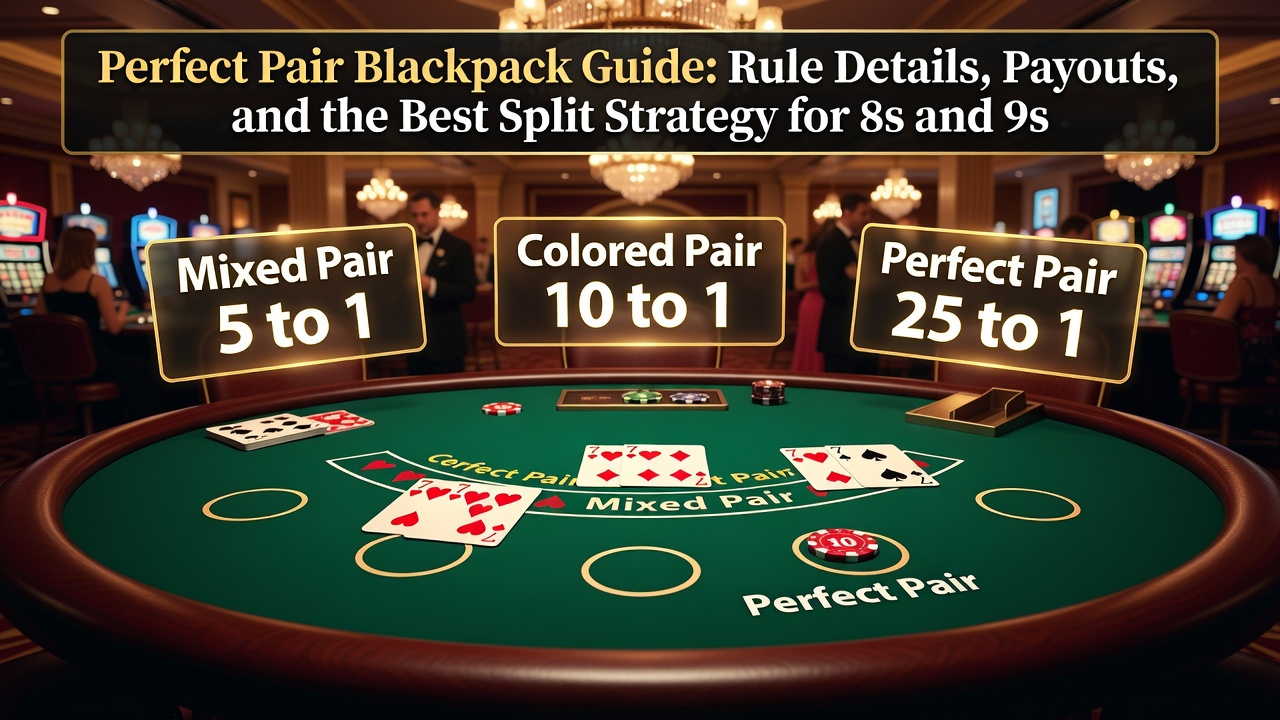
A side bet that pays 25 to 1 sounds like a typo until you understand the odds behind it. Perfect pair blackjack turns a routine hand into a two-part wager: the standard game you already know, plus a bonus bet on whether your first two cards form a pair, and if so, what kind. Most players place the chip out of habit or superstition. Few understand the mechanics well enough to know when the bet actually makes sense.
This distinction matters more than casual players assume. The side bet operates independently of the main hand, with its own paytable, its own odds, and its own house edge that can swing wildly depending on the casino's specific rules. Before wagering real money, it helps to understand exactly what is perfect pair in blackjack and how the payout tiers are structured, because the difference between a mixed pair and a perfect pair can mean a payout gap of twenty times or more.
There's also a strategic layer that most guides skip entirely: what happens when you're dealt a pair of 8s or 9s and have to decide whether to split, especially with the side bet already in play. That decision intersects basic strategy with side-bet math in a way that rewards players who've actually done the homework. This guide covers both angles in full.
What Is Perfect Pair Blackjack and How Does It Work
The Basic Premise of the Side Bet
Perfect pair blackjack is a side wager offered alongside standard blackjack at most physical casinos and online platforms. Before the dealer deals any cards, players place a separate bet predicting that their first two cards will form a pair. It doesn't matter what happens with the rest of the hand - the side bet resolves the moment those two cards hit the table, independent of whether you win, lose, or push the primary hand.
How It Differs From Standard Blackjack Bets
Standard blackjack wagers depend on beating the dealer's hand or hitting 21. The perfect pair wager depends purely on card composition, not comparative value. You could bust on the main hand and still collect a hefty side-bet payout if your first two cards matched. This separation is what makes the bet appealing to players who enjoy an added layer of chance without altering their core strategy at the table.
Where You'll Find This Variant
Most reputable land-based casinos with multiple blackjack tables offer at least one variant with this option, and it's become a standard feature across online casino platforms as well. The betting circle typically includes a designated spot, separate from the main wager, clearly marked for the pair bet.
Understanding the Blackjack Perfect Pair Rule
The Three Pair Categories
The blackjack perfect pair rule classifies pairs into three distinct tiers based on suit and color matching:
- Perfect pair: identical rank, identical suit (two red 7 of hearts, for example - impossible with a single deck but standard in multi-deck shoes)
- Colored pair: identical rank, same color, different suit (a red 7 of hearts and a red 7 of diamonds)
- Mixed pair: identical rank, different colors (a red 7 and a black 7)
Why Suit Matching Determines Payout Tier
This tiered structure exists because the probability of drawing an exact suit match is considerably lower than drawing a same-color or mixed pair. Casinos calibrate payouts to reflect that gap in likelihood, which is why perfect pairs pay dramatically more than mixed pairs despite both technically counting as "pairs" in casual conversation.
Deck Count and Its Effect on the Rule
The number of decks in play changes the underlying probability significantly. Single-deck games make perfect pairs impossible unless multiple decks are shuffled together, which is why nearly every table offering this side bet uses six or eight decks. More decks in the shoe actually increase the raw frequency of pairs appearing, since there are more duplicate cards circulating.
Perfect Pair in Blackjack Payouts Explained
Typical Payout Structure by Tier
Payout tables vary by casino, but a common structure looks like this:
- Mixed pair: pays around 5 to 1
- Colored pair: pays around 10 to 1
- Perfect pair: pays around 25 to 1
Some tables adjust these figures upward or downward depending on the number of decks and the overall house edge they're targeting. Always check the posted paytable before wagering, since a shift of even a few percentage points changes the bet's long-term value considerably.
House Edge on the Side Bet
Perfect pair in blackjack payouts carry a house edge that typically runs higher than the main blackjack game itself, often in the range of 3% to 11% depending on the specific paytable and deck count. This is standard for side bets across the casino floor - they offer bigger, faster payouts in exchange for a statistically worse long-term return than the primary wager.
Comparing Payout Tables Across Casinos
Not all casinos use identical structures. Some inflate the perfect pair payout to 30 to 1 while trimming the mixed pair payout, and others do the reverse. Comparing paytables before sitting down at a table is a habit worth developing, particularly for players who place the side bet regularly, since small differences compound over dozens of hands.
Best Split Strategy for Perfect Pair 8s and 9s Blackjack
Why 8s and 9s Are Strategically Unique
A pair of 8s totals 16, one of the worst hands in blackjack whether you stand or hit. Splitting is almost always correct here under standard basic strategy, regardless of the side bet, because it converts a weak 16 into two hands starting at 8 apiece. A pair of 9s totals 18, a decent hand, but splitting against certain dealer upcards (2 through 9, excluding 7) still produces better expected value than standing pat.
How the Side Bet Interacts With the Split Decision
Here's the key point players often miss: the perfect pair side bet resolves before the split decision even happens. Your payout on the pair wager is locked in based on your original two cards, regardless of whether you later choose to split, hit, or stand on the main hand. This means the best split strategy perfect pair players should follow doesn't actually change because of the side bet - basic strategy for the main hand remains the deciding factor, not the side-bet outcome.
Applying Basic Strategy Without Side-Bet Bias
A common mistake is altering your split decision because you're hoping to protect or "cash in" on the side bet outcome. That instinct is misguided. Since the pair bet has already paid out (or not) by the time you decide to split, your only remaining consideration should be maximizing expected value on the primary hand. Split 8s against virtually any dealer upcard. Split 9s against 2 through 6, 8, and 9, but stand against a dealer 7 or a dealer showing a 10 or ace, where standing on 18 typically edges out splitting.
Practical Example at the Table
Suppose you're dealt two red 8s and place a $10 perfect pair wager beforehand. If both 8s share the same suit, you collect a colored pair payout instantly, regardless of what happens next. You then split the 8s per basic strategy, playing each hand independently against the dealer's upcard. The side-bet payout and the main-hand outcome are two completely separate financial events happening at the same table.
Bankroll and Risk Considerations for Side Bets
Sizing Your Perfect Pair Wager Responsibly
Because the house edge on this side bet runs higher than the main game, most experienced players cap their pair wager at a small fraction of their main bet - often 10% to 20%. This keeps variance in check while still allowing participation in the higher payout potential when a pair does land.
Volatility and Long-Term Expectations
Side bets like this one are inherently high-variance. You might go dozens of hands without a single pair, then hit two in quick succession. Treating the wager as entertainment rather than a reliable profit source keeps expectations realistic and prevents chasing losses after a dry stretch.
Frequently Asked Questions
Is the perfect pair side bet worth placing every hand?
Not necessarily. Given the elevated house edge compared to the main game, placing it every single hand erodes your bankroll faster over the long run. Many players reserve it for select hands or cap it at a small percentage of their main wager to balance entertainment value against expected loss.
Does splitting a pair affect my perfect pair payout?
No. The side bet resolves based on your original two cards before any split decision occurs. Whether you split, hit, or stand afterward has zero impact on the pair bet's outcome, since that wager already settled the moment your cards were dealt.
What's the difference between a colored pair and a perfect pair?
A colored pair shares the same rank and color but different suits, like two black 9s (one club, one spade). A perfect pair shares rank and exact suit, like two 9 of spades from different decks in the shoe. Perfect pairs are rarer and pay significantly more.
Can I use perfect pair payouts to offset a losing main hand?
Technically yes, since the side bet pays independently of the main hand's result. If you win big on a perfect pair but lose your main wager, the side-bet payout can partially or fully offset that loss, though this isn't a strategy you can rely on consistently given how infrequently perfect pairs occur.
Why do casinos offer such high payouts for perfect pairs?
The payout reflects genuine rarity. Drawing an exact suit match on your first two cards is statistically uncommon, especially in single or double-deck games, so the 25 to 1 or higher payout compensates for how infrequently that specific outcome occurs.
Should beginners avoid the perfect pair side bet entirely?
Beginners aren't required to avoid it, but understanding the house edge beforehand helps set realistic expectations. It's a supplementary wager meant to add excitement, not a core strategy for winning consistently at the blackjack table.