
Coin Toss Challenge: An Unpredictable Coin Game, Heads or Tails Game, and Random Chance Game of Crazy Luck
A single flipped coin has two possible outcomes, yet no mathematician, physicist, or professional gambler can reliably predict which one will land face up. That fact alone explains why the coin toss challenge has survived as a decision-making tool and entertainment format for centuries. It settles disputes, opens sporting events, and now fuels an entire category of digital games built around the same principle: pure, unfiltered randomness.
What makes this format endure isn't nostalgia. It's the psychological pull of a fifty-fifty split, a ratio simple enough to understand instantly but tense enough to hold attention until the coin settles. Modern platforms have taken that tension and turned it into a genre of its own. Players looking for a quick, low-complexity thrill often gravitate toward a crazy coin flip game, where the same binary logic that governed ancient decision-making now runs through animated interfaces and instant payout mechanics. The appeal hasn't changed - only the delivery has.
This piece breaks down why the heads or tails game format remains relevant, how randomness actually works behind the scenes, and what separates a casual flip from a structured random chance game with real stakes. Readers will come away understanding both the mechanics and the psychology driving this deceptively simple pastime.
The Origins and Enduring Appeal of the Coin Toss
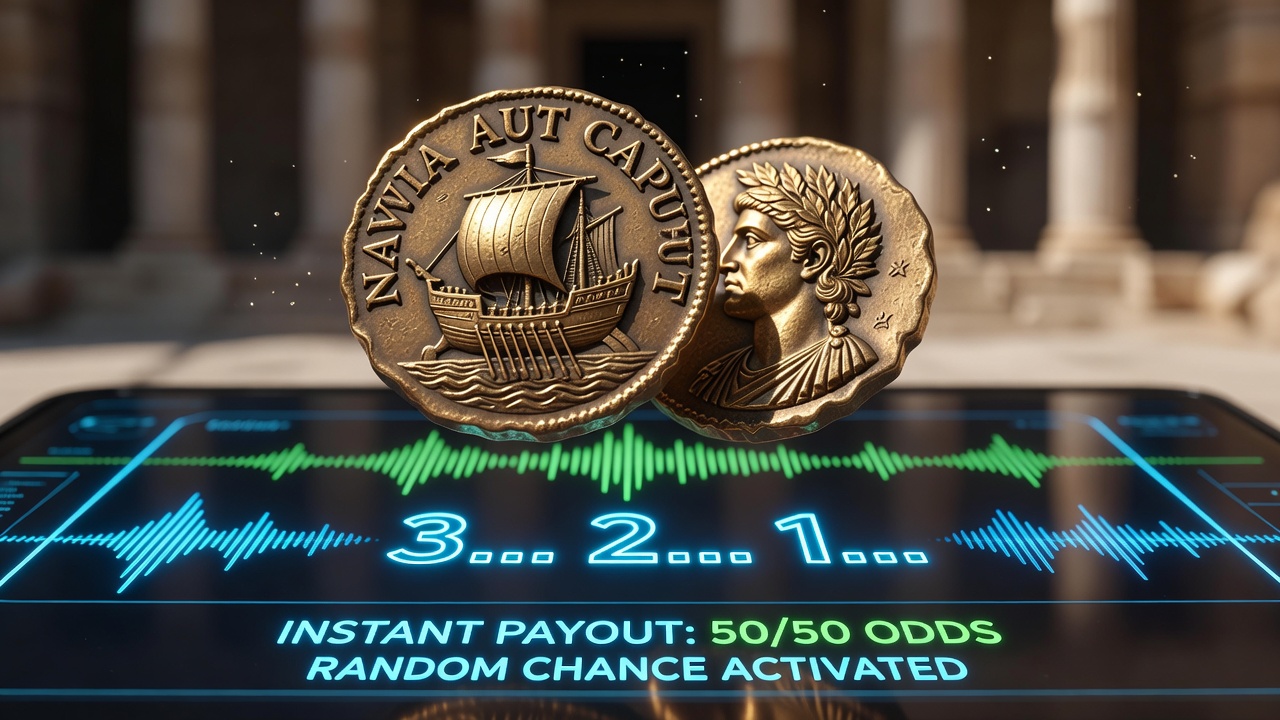
Coin flipping predates modern currency systems by a significant margin. Ancient Roman citizens played a game called "navia aut caput" - ship or head - using bronze coins stamped with a ship on one side and a ruler's head on the other. The mechanics were identical to what players use today: two outcomes, equal weight, one flip.
From Ceremonial Decisions to Everyday Habit
Historically, the flip wasn't entertainment first - it was arbitration. Disputes over land, inheritance, and even military strategy were sometimes settled by a coin toss because no party could argue against a method with no built-in bias. That neutrality is precisely why it survived into modern sports, courtrooms, and casual arguments among friends.
Why Humans Trust a Flip Over a Guess
A verbal guess feels arbitrary because it originates from a person with motives, however small. A coin has none. This distinction matters psychologically - people accept the outcome of an unpredictable coin game far more readily than they accept a subjective decision, even when the practical stakes are identical.
The Shift From Ritual to Recreation
As formalized gambling and gaming industries expanded, the simple flip evolved into structured entertainment. Betting shops, carnival games, and eventually digital platforms recognized that the tension of a fifty-fifty outcome could be packaged, timed, and monetized without losing its core appeal.
Understanding the Mechanics of the Heads or Tails Game
Despite its simplicity, a coin flip involves genuine physics - angular momentum, air resistance, and the height of the toss all play a role. Researchers who have studied coin flipping mechanically found that a coin's landing position is influenced by its starting orientation more than most people assume, though the margin is small enough that practical outcomes still behave as close to random.
Physical Flips vs Digital Simulations
A physical coin toss depends on real-world variables: the flipper's thumb strength, the coin's weight distribution, and the surface it lands on. Digital versions replace these variables with random number generators, which are designed to replicate the same statistical unpredictability without the physical inconsistencies a real coin might introduce.
Why Randomness Is Harder to Fake Than It Looks
True randomness requires the absence of pattern, and human beings are notoriously bad at producing or detecting it. Digital platforms use certified random number generation to avoid the subtle biases a manual flip might carry, which is part of why regulated random chance game formats feel more consistent over repeated play.
The Fifty-Fifty Myth
Even a perfectly fair coin doesn't guarantee an even split over a small number of flips. Short streaks of the same outcome are statistically normal, not evidence of a rigged system. This misunderstanding is one of the most common reasons players misjudge the fairness of an unpredictable coin game.
How Random Chance Games Are Designed to Feel Fair
Game designers building around a binary outcome face a unique challenge: how do you make a fifty-fifty result feel engaging over dozens of rounds? The answer lies in pacing, visual feedback, and incremental stakes rather than altering the actual odds.
Visual and Audio Cues That Build Tension
Slow-motion animations, suspenseful sound design, and countdown timers stretch a split-second event into several seconds of anticipation. This doesn't change the outcome, but it changes how the outcome is experienced, which is central to why a well-designed coin toss challenge keeps players engaged despite the simplicity of the mechanic.
Transparent Odds as a Trust Signal
Reputable platforms disclose their random number generation certification and payout structures openly. Players who understand the exact odds tend to trust the format more, since there's no ambiguity about whether the fifty-fifty split is genuine.
Streaks, Multipliers, and Escalating Risk
Many digital adaptations layer additional mechanics onto the base flip - letting players double down on consecutive correct guesses, for instance. This introduces compounding risk without altering the underlying probability of each individual toss.
Psychology Behind the Crazy Luck Game Experience
The emotional charge of a coin flip comes from its brevity. Unlike card games or dice-based formats with multiple stages, a coin toss delivers its verdict almost instantly, which creates a distinct psychological rhythm: anticipation, resolution, repeat.
Why Instant Outcomes Trigger Stronger Reactions
Behavioral research on decision-making consistently shows that shorter feedback loops intensify emotional response, whether that response is relief, disappointment, or excitement. A crazy luck game built on instant resolution taps directly into this effect, which explains why players often describe the format as more intense than its simplicity would suggest.
The Illusion of Control in a Fully Random Event
Some players develop rituals - calling heads before every flip, or timing their guess to a specific rhythm. These habits have zero effect on outcomes but provide a sense of agency in an otherwise uncontrollable event. This is a well-documented psychological pattern in games of pure chance.
Loss Aversion and the Pull to Keep Flipping
Losing a round often triggers a stronger urge to continue than winning does, driven by a desire to recover rather than a calculated strategy. Recognizing this pattern is useful for anyone playing these formats recreationally, since it explains why sessions can extend longer than originally intended.
Strategic Considerations When Playing an Unpredictable Coin Game
There's no strategy that improves the actual odds of a fair coin flip - the probability remains fixed regardless of previous outcomes or betting patterns. That said, strategic thinking still has a place in how players approach the format responsibly.
Bankroll Management Over Prediction Systems
Because no pattern-based system can beat a truly random event, the only meaningful strategy involves managing stakes rather than predicting outcomes. Setting a fixed budget before playing prevents the common trap of chasing losses across an unpredictable sequence of flips.
Recognizing the Gambler's Fallacy
Believing that five consecutive heads makes tails "due" is a well-known cognitive error. Each flip remains an independent event with the same fifty-fifty probability, unaffected by any prior result.
Setting Session Limits in Fast-Paced Formats
Because a heads or tails game resolves so quickly, sessions can rack up many rounds in a short time. Establishing a time limit, not just a monetary one, helps keep the experience recreational rather than compulsive.
- Decide on a fixed budget before starting any session
- Avoid increasing bets specifically to recover previous losses
- Treat each flip as statistically independent from the last
- Set a time cap in addition to a spending cap
Where the Coin Toss Challenge Fits in Modern Gaming Culture
Simplicity has become a competitive advantage in an industry often defined by complexity. While many games layer mechanics, storylines, and progression systems on top of their core gameplay, the coin toss challenge succeeds by doing the opposite - stripping everything down to a single, transparent decision point.
Accessibility as a Core Selling Point
No rules to memorize, no strategy guide required. This low barrier to entry makes the format appealing to players who want quick engagement without a learning curve, distinguishing it from more mechanically dense casino games.
A Bridge Between Casual Play and Structured Gambling
Because the format is so easy to grasp, it often serves as an entry point for players new to chance-based gaming before they explore more complex options. The transparency of a fifty-fifty outcome makes the underlying concept of odds easier to understand than in games with layered probability structures.
The Format's Adaptability Across Platforms
From physical coin-flip apps to fully animated casino-style implementations, the core mechanic translates easily across formats without losing its identity. This adaptability is a major reason the concept has persisted through generations of gaming technology rather than fading with older formats.
Frequently Asked Questions
Is a coin toss ever truly 50/50?
In practical terms, yes - over a large number of flips, outcomes trend toward an even split. Physical factors like starting position can introduce tiny statistical biases, but these are negligible enough that both physical and digital versions are treated as fair for practical purposes.
Can you predict a coin flip with practice?
Skilled flippers can influence outcomes slightly through controlled technique, but this requires deliberate manipulation, not natural skill development. In a standard game setting, particularly digital versions using random number generation, no amount of practice affects the result.
Why do digital coin flip games feel more suspenseful than real ones?
Design elements like slow-motion animation, sound cues, and countdown timers extend the emotional buildup artificially. A real coin flip resolves in under a second, while digital versions often stretch that moment intentionally to heighten anticipation.
Are online coin flip games rigged?
Regulated platforms use certified random number generators audited by independent testing agencies, making manipulation extremely unlikely. Players should verify that a platform discloses its certification before assuming fairness, since unregulated sites carry more risk.
What's the difference between a coin toss and other chance-based games like dice or roulette?
A coin toss has only two outcomes, making it the simplest possible probability structure, while dice and roulette involve multiple outcomes with varying odds per result. This simplicity is exactly what makes the coin flip format easier to understand and faster to resolve.
Does betting more after a loss improve your chances of winning?
No - this approach, often called the gambler's fallacy, assumes past results influence future ones, which isn't true for independent random events. Each flip carries the same fixed probability regardless of betting size or prior outcomes.