
Cuba has posted its worst digital freedom score on record, according to Freedom House's newly released Freedom on the Net 2026 report. The island scored 19 out of 100, down two points from the previous year, placing it among the most restrictive internet environments on earth. The finding, published Thursday as part of a report titled "Seismic Shifts on the Global Internet," covers conditions between June 2025 and May 2026.
A Score Built on Collapse
The 19-point total breaks down into three components: 5 out of 25 for obstacles to access, 9 out of 35 for content limitations, and just 5 out of 40 for violations of user rights. That last figure is the most telling. It measures the degree to which ordinary Cubans can go online without fear of surveillance, prosecution, or retaliation, and a score that low signals near-total exposure. The drop erases gains recorded in 2025 and pushes Cuba just above Russia, which scored 16, while China, Iran, and Myanmar sit even lower at 9 each among the 38 countries assessed.
Power Failures as a Censorship Tool
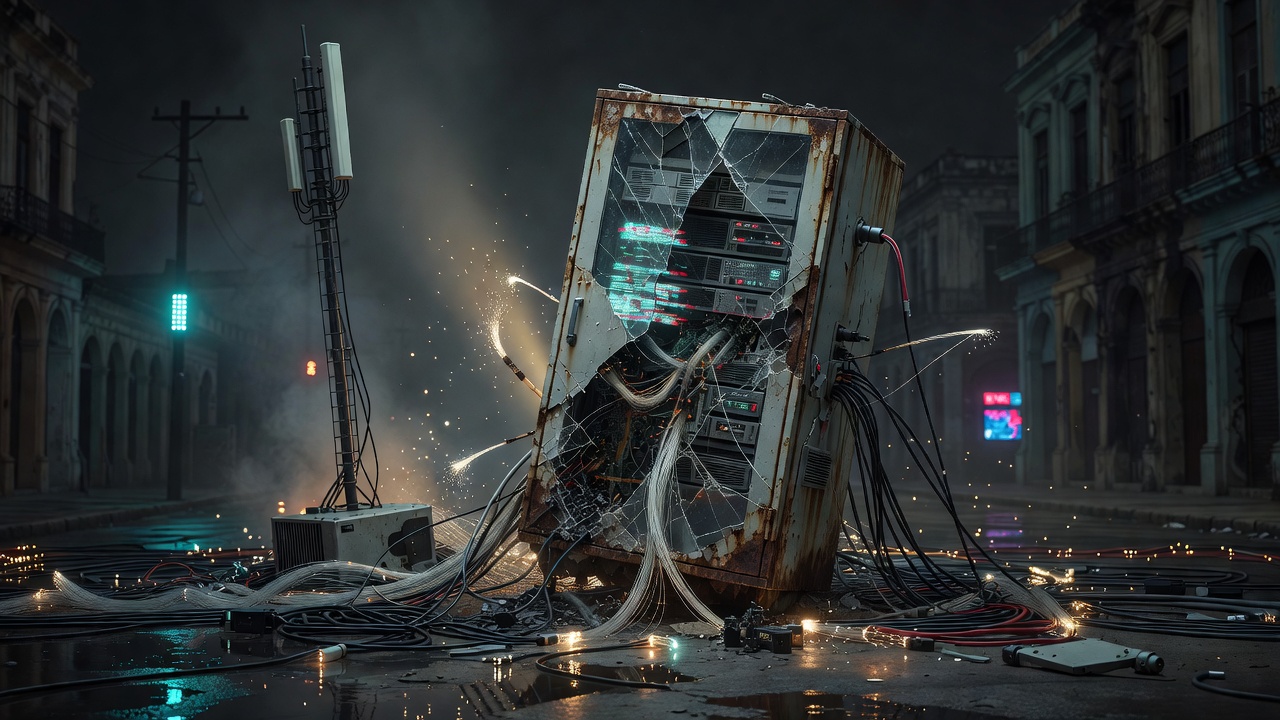
Much of the decline traces back to Cuba's energy crisis, which has become inseparable from its communications crisis. Mobile towers and telecommunications cabinets rely on backup batteries that last only a few hours once the power grid fails, and documented outages left roughly 47.5 percent of mobile radio bases and 56.5 percent of telecom cabinets inoperative during the worst periods. A single blackout in March 2026 cut internet traffic by 65 percent, with full recovery taking around 29 hours. Whether intentional or not, the effect mirrors deliberate network shutdowns seen in other authoritarian states: when the lights go out, so does the ability to organize, document, or simply communicate.
Pricing People Off the Network
Economic pressure has compounded the infrastructure failures. In May 2025, state monopoly ETECSA capped peso-denominated mobile reloads at 360 CUP a month, effectively forcing many users toward foreign-currency data packages. Freedom House estimates this shift raised the real cost of mobile internet access by a factor of 13, a change that functions as a de facto access restriction even without any formal censorship order. For a population already facing severe economic strain, the result is the same as outright blocking: fewer people online, less often, and with less capacity to share information freely.
Prosecuting the Post, Not Just the Protest
The report's sharpest findings concern user rights. Cuba's score for the ability to mobilize online dropped from three points to two, reflecting a wave of prosecutions tied directly to social media activity. Sentences cited include a 14-year prison term for organizing protests online, seven years for activist Alexander Verdecia over social media posts, six years for a journalist documented by the Committee to Protect Journalists, and five years for Yasser García López in May 2026 over Facebook posts. Freedom House also assigned a zero to the indicator measuring freedom from technical attacks, noting that ETECSA "apparently facilitated" the hacking of accounts belonging to activists, opposition figures, and independent journalists. The organization is careful to frame this as its own assessment rather than a judicial finding, but it points to a structural vulnerability: when a single state-controlled provider handles both network access and verification messaging, it holds the means to intercept authentication codes used to secure personal accounts.
A separate January 2026 study by Prisoners Defenders, drawing on 200 testimonies, found that 98.5 percent of participants reported reprisals connected to their digital activity, and nearly half said their accounts had been accessed without authorization. At least 23 independent Cuban outlets, including 14ymedio, CubaNet, Diario de Cuba, El Toque, and CubaHeadlines, remained blocked throughout the period.
Part of a Longer Global Slide
Cuba's decline fits a broader pattern Freedom House has tracked for sixteen consecutive years: global internet freedom continuing to erode, with conditions worsening in 16 of the 38 countries surveyed this cycle and improving in only eight. "Authoritarian regimes are reshaping the internet as a system of control, deciding who can connect, what they can see, and if they can be heard," said Kian Vesteinsson, the report's author and Freedom House's Deputy Director of Research. "After 16 years of decline, democracies must lead the charge for a free and open internet. Dictators invest in keeping people disconnected. We must invest in making censorship fail."